
EICMA 2026: Beyond Spectacle, Turning Products into Experiences
From illuminated architectures and suspended motorcycles to interactive installations and surprisingly simple moments of engagement, EICMA 2026 offers valuable insights into exhibition design, visual identity and the relationship between physical spaces and brand experiences.
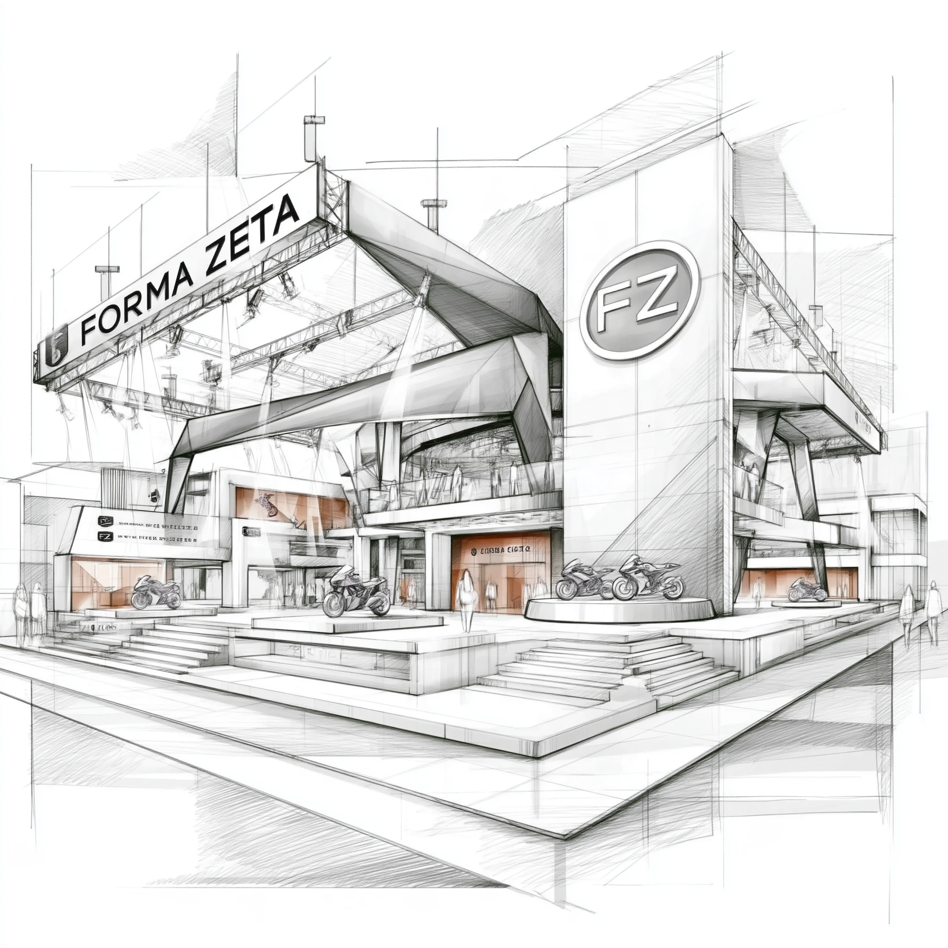
Beyond the visual impact
Walking through EICMA 2026 raises an interesting question for anyone working in creative direction and experience design: what makes an exhibition stand genuinely effective?
Is it its scale, its visual impact, its technology, or the way visitors connect with what is being presented?
Across the exhibition, ambitious lighting structures sit alongside minimalist environments, immersive product displays, physical interactions and experiences built around motorcycle culture.
What emerges is not a single aesthetic trend, but a collection of approaches to a shared design challenge: making a brand recognizable, its products understandable and its presence memorable.
The product as architecture
One of the most compelling observations is how effectively products can shape their own exhibition environments.
LeoVince turns exhaust systems into a graphic installation. Harley-Davidson presents fuel tanks almost like collectible design objects. Helmet and component manufacturers create visual patterns through repetition, structure and carefully controlled lighting.
These solutions transform product ranges into recognizable spatial identities.
LOBOO offers a particularly interesting example. Transparent motorcycle silhouettes provide the context for luggage systems and accessories without visually competing with them.
The motorcycle remains present as a reference, while the components become the actual protagonists.
This is exhibition design at its most purposeful: the display doesn't simply attract attention. It explains the product.
Similar thinking appears in suspended motorcycles, exploded mechanical assemblies and displays that isolate technical elements to make their construction easier to appreciate.
Light, colour and the risk of visual sameness
Lighting plays a defining role across many of the observed stands.
Geometric portals, suspended structures, illuminated edges and reflective materials transform light into an architectural tool. Bold colour systems connect physical environments, products and visual communication.
These devices can make a brand visible from across a crowded exhibition hall.
Yet their widespread use creates a challenge.
When similar combinations of angular geometries, LED outlines and saturated colours appear across unrelated brands, visual impact can gradually become a shared aesthetic rather than a distinctive identity.
This makes quieter approaches equally relevant.
Clean environments, carefully spaced products, warm-looking materials and restrained lighting can communicate confidence without relying on visual intensity.
The distinction is not between minimalism and spectacle. It is between visual decisions that express a particular brand and those that simply follow an established formula.
Building a world around the product
Another recurring approach involves placing motorcycles within an imagined environment.
Desert landscapes, mountain settings, rocky surfaces and urban scenes help visitors understand not only what a motorcycle is, but where it belongs.
This creates a connection between product and lifestyle.
The exhibition becomes a form of environmental storytelling, turning functional features into the suggestion of a journey, an identity or a possible experience.
But context matters.
A generic adventure landscape can easily become decorative. A carefully chosen detail, on the other hand, can communicate the vehicle's intended use with much greater precision.
Effective scenography doesn't necessarily require more objects. It requires more relevant ones.
Engagement is not a technology contest
Riding simulators remain a visible component of the EICMA experience.
Combining a real motorcycle with a digital racing environment is an intuitive way to introduce physical participation, competition and entertainment.
However, repetition also exposes the limitations of the format.
A generic racing game may be enjoyable while leaving very little connection to the specific brand behind it.
Some of the most interesting interactions are considerably simpler.
BEON's oversized helmet turns visitors into the subject of a playful photograph. Harley-Davidson's table football creates an informal social moment. The Proraso barber corner introduces a personal service into the exhibition environment.
Each of these experiences works through a recognizable human action.
Engagement is not defined by technological complexity. It is defined by how naturally people understand and participate in an experience.
Technology needs a purpose
One notable installation at Richa uses a holographic fan display to present animated content related to technical clothing.
The floating visual effect creates immediate curiosity, but reflections and overlapping backgrounds can make detailed information difficult to interpret.
It illustrates a familiar tension in creative technology: novelty can capture attention without necessarily improving communication.
The real opportunity lies in using technology to make hidden features visible, complex concepts accessible or interactions more meaningful.
Technology becomes valuable when its purpose is clear, not simply when its presence is noticeable.
Designing the complete journey
Perhaps the most useful lesson from EICMA 2026 is that exhibition design should be approached as a connected visitor journey.
An effective stand needs to attract attention, introduce a product, communicate its value, encourage participation and create a meaningful next step.
These functions should reinforce one another.
A QR code without a useful destination, an impressive screen without a clear message or an interactive installation disconnected from the brand can introduce complexity without adding much value.
From a creative direction perspective, this is where spatial design, visual culture, storytelling and interactive experience begin to overlap.
A successful exhibition environment is not necessarily the one offering the greatest number of stimuli. It is the one that gives every element a clear role.
That is the observation I find most relevant from EICMA 2026.
Products can become architecture. Scenography can communicate a world. Interaction can transform passive observation into an active relationship.
The strongest experiences emerge when all three work together.
And when every element has a reason to exist.
This article is based on a qualitative review of exhibition environments documented at EICMA 2026 on November 5. The observations are not intended as a comprehensive ranking of exhibitors or a quantitative assessment of individual activations.
FZ Journal - Exploring Creativity in the Age of AI.