
The Real Cost of AI-Generated Films: What Hell Grind Reveals Beyond the “Made in Hours” Narrative
Higgsfield’s 95-minute feature Hell Grind offers a rare look at the actual economics of long-form Generative AI production: roughly $500,000 in budget, around $400,000 spent on compute, a 15-person team and 14 days of production. For the first 25 minutes alone, 16,181 video generations were needed to produce 253 final shots. These numbers complicate the social-media fantasy of zero-cost commercials, movies made in an afternoon and the mythical one-person studio capable of replacing an entire film crew with a single AI tool.
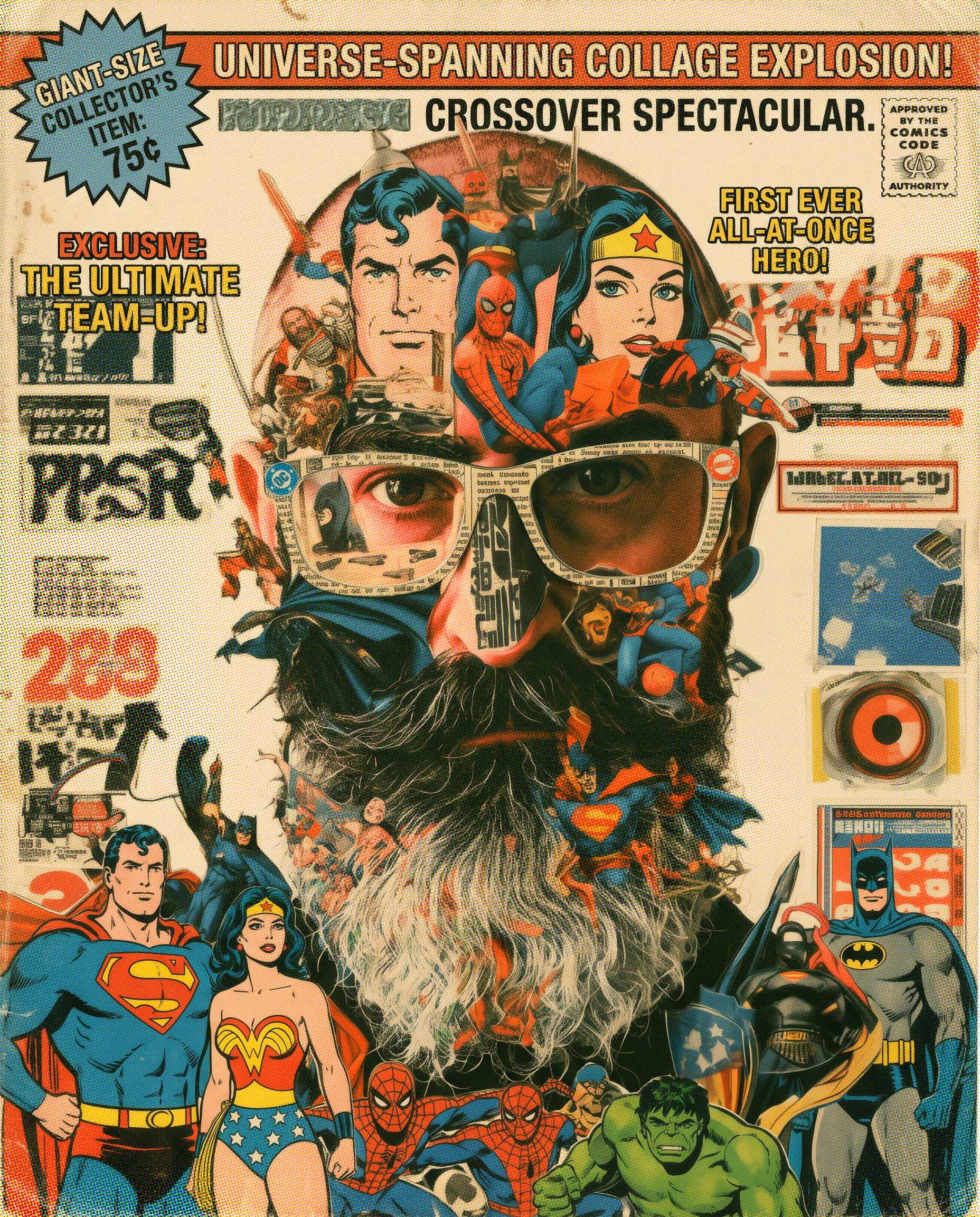
There is a version of the Artificial Intelligence revolution that performs exceptionally well on social media.
A movie made in a few hours.
A commercial produced for almost nothing.
An entire campaign created by one person over a weekend.
Director, screenwriter, cinematographer, VFX supervisor, editor and sound designer collapsed into a single creator with a laptop and a subscription to a Generative AI platform.
It makes for an excellent LinkedIn post.
It is a much less convincing description of how serious AI production actually works.
Higgsfield’s 95-minute feature Hell Grind is interesting precisely because it offers something rarer than another impressive ten-second demo: a glimpse into what happens when generative video is pushed toward feature-length production, where characters, environments, visual language and continuity need to survive beyond the isolated shot.
The reported numbers are revealing.
A 15-person team built the film in roughly 14 days with a total budget of about $500,000. According to The Wall Street Journal, approximately $400,000 — 80% of that budget — went to AI compute.
That fact alone should complicate some of the more simplistic claims surrounding AI filmmaking.
AI does not necessarily remove production costs.
It changes where those costs live.
What used to be spent on locations, physical production, equipment, logistics and larger crews can increasingly migrate toward GPUs, inference, cloud infrastructure, generations, storage and model orchestration.
The budget does not disappear.
It changes address.
The most important number is not $500,000. It is 16,181.
For the first 25 minutes of Hell Grind, the team reportedly generated 16,181 video clips to arrive at 253 final shots.
That works out to roughly 64 generations for every shot that survived into the film.
In other words, fewer than two percent of those generated attempts became final shots.
That may be the most meaningful statistic in the entire project.
Anyone working seriously with AI image and video systems already knows why.
Generating something is easy.
Generating the specific thing a project actually needs is considerably harder.
A shot can be almost perfect but the eyeline is wrong.
The composition works but the lighting does not.
The character is consistent but the movement feels synthetic.
The camera motion is technically impressive but dramatically meaningless.
An object shifts position.
Spatial continuity breaks.
A performance looks polished but fails to communicate the required emotion.
So you generate again.
Change the prompt.
Change the reference.
Adjust the composition.
Switch models.
Modify the camera movement.
Extract a frame.
Start again.
This is not particularly close to the magical button described in viral posts.
It looks much more like a new production discipline.
Prompting is not asking a machine to “make a movie”
The level of instruction involved in Hell Grind is equally revealing.
The Wall Street Journal reported that prompts could reach roughly 3,000 words, incorporating detailed instructions around lighting, composition, camera behavior and physical realism. Traditional filmmaking knowledge was still necessary to prevent the resulting images from simply looking generically AI-generated.
Nebius, which supplied cloud infrastructure for the production, has described workflows involving hundreds of variations per scene and overnight batch generation running across hundreds of NVIDIA Blackwell GPUs.
At that point, the meaning of “prompting” starts to change.
When the prompt encodes lenses, lighting, blocking, atmosphere, materials, physical behavior, camera movement and continuity, we are not watching cinematographic expertise disappear.
We are watching some of that expertise being translated into a different interface.
The myth of the one-person studio
A single creator can unquestionably accomplish far more today than was possible only a few years ago.
That matters.
A Creative Director can independently develop concepts, storyboards, moodboards, animatics and previsualization. A designer can explore dozens of visual directions without immediately organizing a photo shoot. An independent filmmaker can create images that would previously have been financially inaccessible.
This is a profound transformation of the Creative Workflow.
But there is a large conceptual leap between that reality and claiming that someone using one tool has suddenly become a director, screenwriter, cinematographer, production designer, editor, colorist and VFX supervisor at the same time.
Access to a model capable of simulating a cinema lens does not automatically provide the eye of a cinematographer.
Generating a shot does not tell you why that shot should exist.
Generating a scene variation does not teach storytelling.
Having access to twenty generative models does not automatically create Creative Direction.
AI dramatically compresses the distance between intention and execution.
It does not remove the need for intention.
The missing metric in AI social media: iteration
Most Generative AI content shows the successful output.
Almost none of it shows the graveyard behind it.
That makes sense from a communication perspective.
“I made this commercial in three hours” is a great headline.
“I made this in three hours after years of experience in Design, dozens of failed attempts, multiple models, references, editing, compositing, corrections and hundreds of dollars in tools and infrastructure” is considerably less viral.
It may also be considerably more accurate.
The actual cost of an AI Workflow is not simply the price displayed next to the Generate button.
It is the cost of the entire system required to arrive at the desired result.
Compute.
Time.
Iterations.
Selection.
Failures.
Different tools.
Subscriptions.
Upscaling.
Editing.
Compositing.
Sound.
Color.
Storage.
And, above all, human judgment about what deserves to survive.
Hell Grind simply makes that dynamic visible at a much larger scale.
16,181 generations resulting in 253 shots means that the central problem is no longer merely generating images.
It is curating a computational space of possibilities.
Curation is creative labor.
Fourteen days is incredibly fast. It is not the same as zero work.
The 14-day production window should also be understood for what it is.
Creating a 95-minute feature in two weeks with a team of 15 is technologically remarkable.
Pretending otherwise would be just as ideological as claiming AI has made professional expertise obsolete.
The compression of production timelines is real.
Smaller crews can be real.
Access to previously impossible imagery is real.
But Hell Grind’s most interesting lesson is not that filmmaking has suddenly become free.
It is almost the opposite.
Once Generative AI moves beyond the spectacular demo and becomes a production system, problems of scale, reliability, consistency, infrastructure and creative control immediately become visible.
The film was shown in Cannes in connection with the Marché du Film ecosystem, but it was not part of the Festival de Cannes Official Selection — a useful distinction in a field where the framing of technological achievements can quickly become part of the marketing story itself.
Traditional-production comparisons need context
Higgsfield has suggested that a conventionally produced project of comparable ambition could have cost tens of millions of dollars. That figure comes from the company itself rather than an independent production benchmark, and direct comparisons are difficult because the two cost structures are fundamentally different.
The potential reduction can still be enormous.
But reduction and elimination are not the same thing.
This is where the conversation around AI Strategy in the creative industries needs to become more mature.
The useful question is not:
“How many people can I remove?”
It is:
“How does the production system change when some capabilities become computational?”
Some jobs will shrink.
Some tasks will be automated.
Some functions will be absorbed into software.
At the same time, the value of people capable of directing these systems is likely to increase: people who can establish a visual language, preserve consistency, design pipelines, evaluate hundreds of outputs, combine different models and distinguish between an image that is merely impressive and one that actually serves the project.
AI does not eliminate craft. It makes the absence of craft easier to see.
There is an interesting paradox inside the democratization of creative technology.
When everyone can generate a beautiful image, a beautiful image becomes less valuable.
When everyone can generate ten seconds of cinematic-looking video, value migrates toward the things that remain harder to automate: coherence, systems, taste, direction, editing, storytelling and Visual Culture.
Competitive advantage gradually moves from being able to generate toward knowing what to generate, why to generate it and what to do with it afterwards.
This may be the less spectacular side of the Creative Technology revolution.
It is also the more consequential one.
Real Innovation is not pretending that a new technology has suddenly erased cost, skill and complexity.
It is understanding which forms of complexity have disappeared — and which new ones have emerged.
Hell Grind does not prove that Artificial Intelligence cannot make production faster or dramatically cheaper.
It clearly can.
What it does expose is how misleading it is to turn that potential into a universal equation where one person plus one prompt somehow equals an entire film studio.
Behind those 95 minutes are 15 people.
There are hundreds of thousands of dollars in infrastructure.
There are tens of thousands of generations.
There are thousands of decisions.
And there is still one thing no tool automatically supplies:
the judgment required to know which output is the right one.
That may be a more useful starting point for a serious conversation about AI and creativity.
Not how little it costs to press Generate.
But how much work it takes to know when to stop pressing it.
FZ Journal - Exploring Creativity in the Age of AI.