
Be the Creative Director of Your Prompts
The quality of AI-generated results depends less on the model itself than on the ability to define a clear intention and communicate it effectively. In the age of Generative AI, the real competitive advantage is not writing more prompts—it is developing the creative direction that shapes every interaction with a language model.
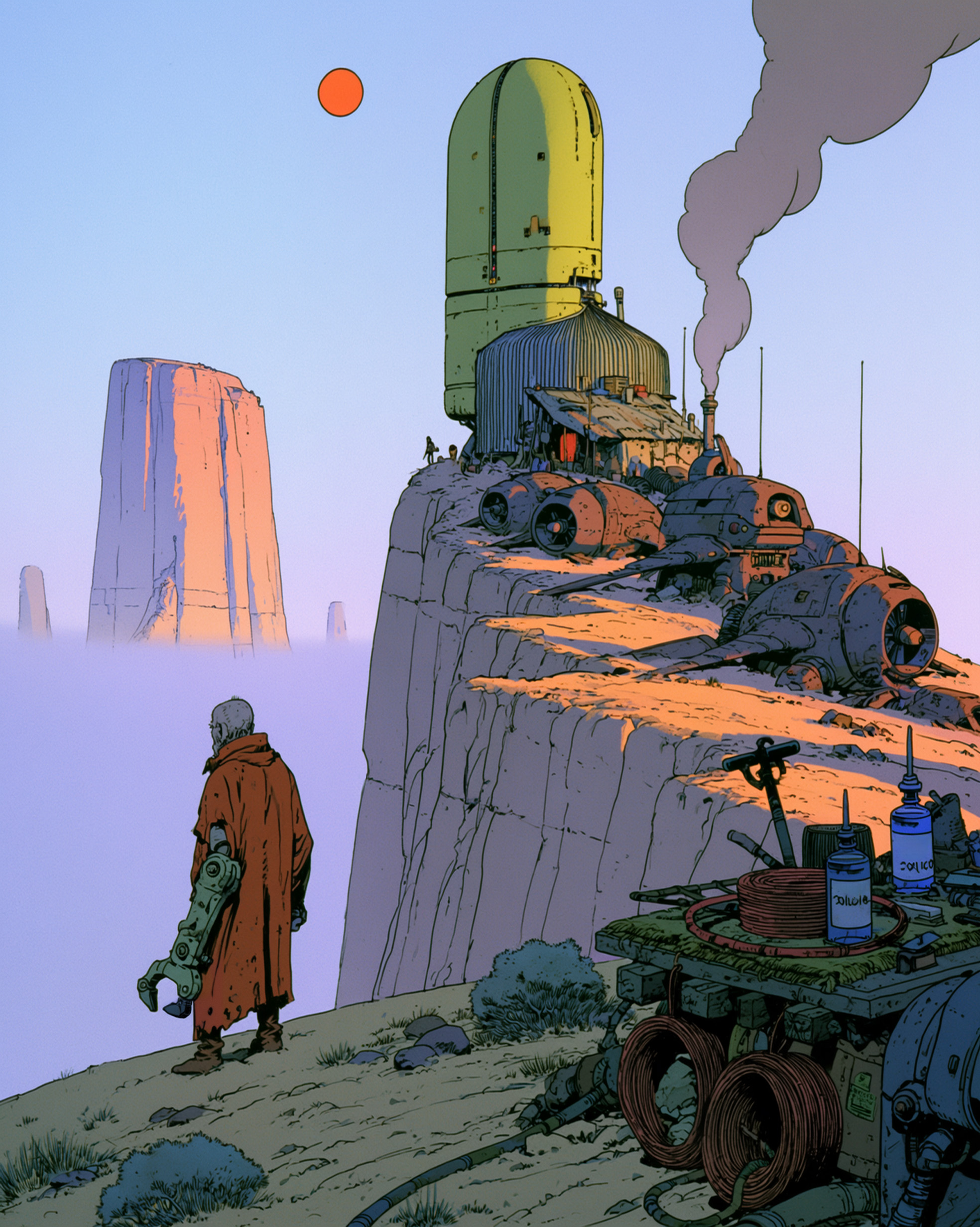
For decades, the role of a creative director has been about transforming ideas into meaningful experiences—through visuals, words, products, brands, or campaigns. Today, that responsibility extends to another medium: conversations with artificial intelligence.
Every prompt is a creative brief.
Every interaction with an LLM is a design process.
And, like every design process, the outcome reflects the quality of the direction behind it.
This reveals an important distinction.
Knowing how to use AI is not enough.
You need to know what you want.
And you need to know how to communicate it.
These two abilities have become one of the clearest differences between people who treat Generative AI as a shortcut and those who use it as an extension of strategic thinking.
When generating an image, we are not simply describing what should appear on the screen. We are defining intent.
Mood, visual language, composition, references, lighting, materiality, perspective, narrative rhythm—every element becomes part of an invisible creative direction.
A strong prompt is not a collection of keywords.
It is creative direction translated into language.
The same principle applies when asking an LLM to write an article, design an interface, develop a brand system, analyze research, build documentation, or improve an AI workflow.
Language models cannot infer unspoken intentions.
They can only work with the intentions we manage to express.
That changes the role of every creative professional.
The quality of the output depends not only on the intelligence of the model but also on the clarity of the thinking behind the request.
In that sense, a prompt is not the beginning of the process.
It is the final expression of decisions that have already been made.
Who is this for?
What problem should it solve?
What tone should it adopt?
How deep should it go?
Which constraints matter?
Which cultural references genuinely support the objective?
These are the same questions creative directors have always asked.
Artificial Intelligence does not remove this responsibility.
It amplifies it.
This is why reducing the conversation to prompt engineering misses the bigger picture.
Technical skill matters.
Creative judgment matters more.
The ability to define priorities, recognize quality, shape narratives, and translate abstract ideas into precise language remains the most valuable capability.
This is Creative Direction for the era of Artificial Intelligence.
It is not about discovering secret prompt formulas.
It is about using language as a design tool.
As language models continue to improve, producing technically competent content will become increasingly accessible.
What will continue to differentiate designers, strategists, creative technologists, and creative leaders is not their ability to generate outputs.
It is their ability to generate intent.
Because while AI keeps getting better at producing answers, meaningful work still begins with asking the right questions.
In a world where anyone can create images, documents, interfaces, and ideas within seconds, the real competitive advantage will not be writing more prompts.
It will be directing your thinking with greater clarity.
Being the creative director of your prompts ultimately means applying the same discipline that has always defined exceptional creative work: having a vision, communicating it with precision, and guiding every decision toward a meaningful outcome.
AI accelerates execution.
Creative direction still defines the result.
FZ Journal - Exploring Creativity in the Age of AI.