
Designing Processes, Not Prompts
In creative work with Generative AI, the prompt is only the visible fragment of a much larger process. The real value lies in the workflow: a system of direction, constraints, visual culture and design decisions that turns outputs into a recognizable language.
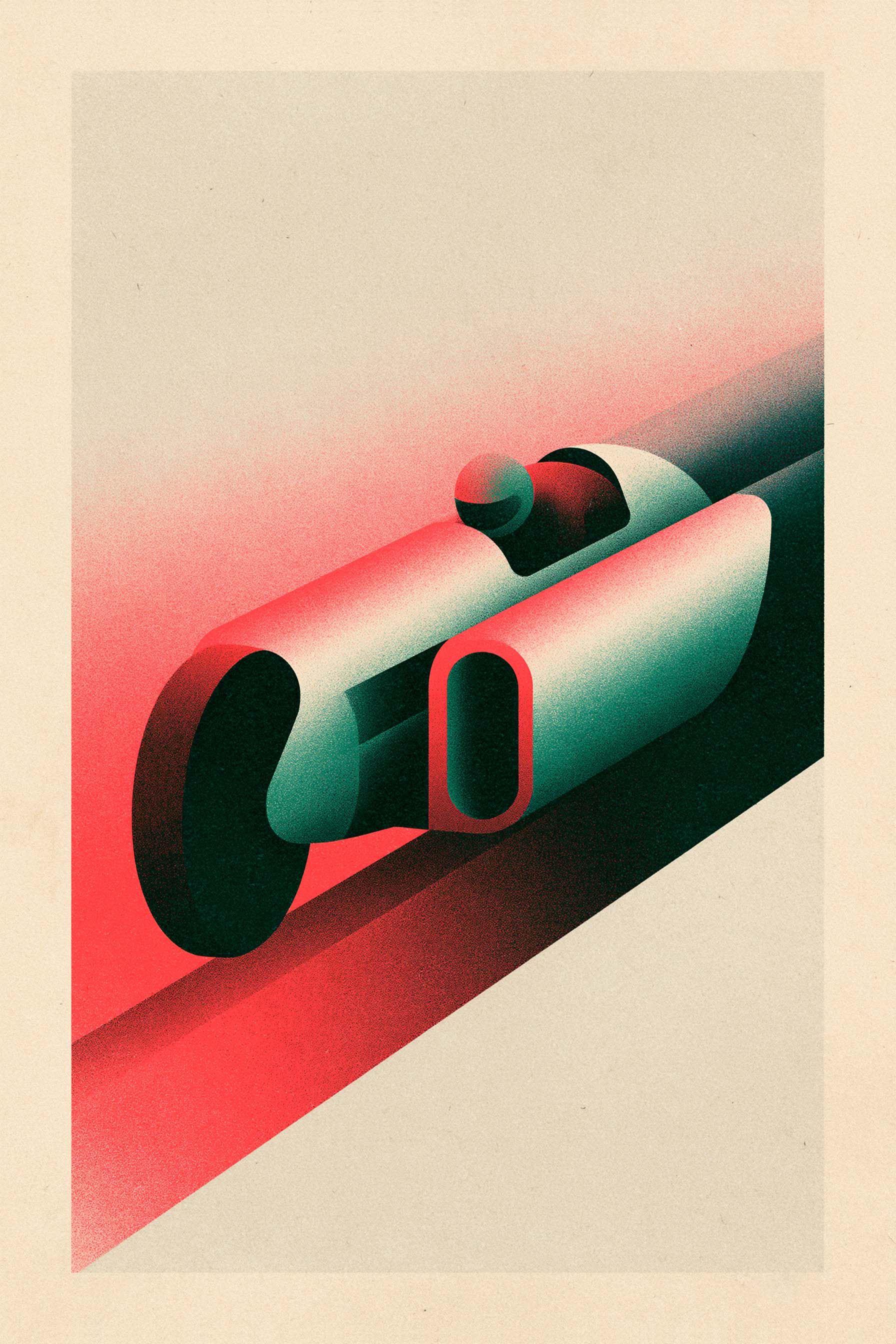
There is a common misunderstanding around Generative AI.
Many people still believe that the creative process begins and ends with a prompt. You write a sentence, the machine produces an image, and the work is done.
In reality, at least in my experience, the prompt is only a small visible fragment of a much larger system.
A prompt is an input.
A workflow is a creative system.
This distinction has become central to the way I work, especially through Forma Zeta Digital Garage, https://www.instagram.com/f.zimbaldi/ my personal visual laboratory dedicated to fictional motorcycles, speculative design and AI-assisted concept development.
At first glance, a fictional motorcycle concept may look like a single image.
A clean render.
A strong side view.
A cinematic video.
A futuristic custom build that does not exist in the real world.
But behind every image there is a sequence of decisions.
Proportions.
Mechanical logic.
Visual references.
Cultural influences.
Lighting.
Materials.
Brand memory.
Design tension.
Narrative.
Even when the final result is generated with AI, the creative process does not start with the software.
It starts with a direction.
Before opening any generative tool, I try to understand what kind of object I am trying to create. Not simply “a futuristic motorcycle”. That is too generic. What matters is the feeling of the object, the presence it should have, the memory it should activate.
Is it aggressive or elegant?
Is it a reinterpretation of a historical model?
Is it closer to industrial design, racing culture, cyberpunk, brutalism, Italian craftsmanship, Japanese engineering or 1980s endurance racing?
Should it look like a prototype from the future, or like a forgotten concept from an alternative past?
These questions matter more than the tool itself.
Because Generative AI is incredibly powerful, but it is also highly sensitive to the quality of the intention behind it.
A vague intention produces vague results.
A precise vision creates resistance.
It forces the machine to move away from the visual average.
This is why, for me, AI-assisted design is not about asking for something beautiful. It is about building a field of constraints.
Constraints are not limits.
They are the structure that gives an idea its identity.
In Forma Zeta Digital Garage, I often begin with a specific design tension: a Ducati DesertX transformed into a café racer with a scrambler soul; a Honda CBX reimagined as a final combustion-engine manifesto; a fictional naked bike that combines mechanical plausibility with an almost sculptural presence.
The interesting part is never the label.
It is the contradiction.
Enduro and café racer.
Vintage and futuristic.
Industrial brutality and refined surfaces.
Mechanical realism and cinematic imagination.
That contradiction is where the concept begins to breathe.
Once the direction is clear, AI becomes part of a larger Creative Workflow.
Sometimes I start from a written brief.
Sometimes from a rough sketch.
Sometimes from an existing image that I want to transform while preserving key proportions.
Sometimes from a memory: a motorcycle I saw as a child, a fairing shape from the 1990s, a racing livery, a frame architecture, a headlight, an exhaust line, a feeling.
The first generation is rarely the final image.
It is material.
A first negotiation with the machine.
From there, the real work begins.
I select what works.
I reject what is visually impressive but conceptually weak.
I correct proportions.
I refine details.
I change the camera angle.
I insist on mechanical coherence.
I remove decorative noise.
I look for a silhouette that can be recognized in a fraction of a second.
In this process, AI is not a replacement for Creative Direction.
It is an acceleration chamber.
It allows me to explore more possibilities, faster. But speed alone is not the point.
Without direction, speed only produces more noise.
The value of a workflow is that it creates continuity between intuition and final output.
A single prompt can generate an image.
A workflow can generate a language.
This is the most important difference.
When I work on Forma Zeta Digital Garage, I am not simply trying to produce more motorcycle images. I am trying to develop a recognizable visual world.
A world where motorcycle culture, Design, Artificial Intelligence, photography, cinema and speculative storytelling contaminate one another.
The tools may change.
The workflow evolves.
The aesthetic must remain identifiable.
That is why I do not believe in chasing every new AI model as if the next one will magically solve the creative problem.
New tools can improve resolution, realism, consistency, animation or control.
But they cannot replace taste.
They cannot replace Visual Culture.
They cannot replace the ability to understand when an image has character and when it is only technically impressive.
This is where the role of the creative becomes more important, not less.
Generative AI can produce endless variations.
But someone still has to decide which variation has meaning.
Someone has to know what to keep, what to remove, what to push further and what to abandon.
Someone has to recognize the difference between a spectacular output and a coherent idea.
That someone is not the tool.
It is the creative mind directing the process.
In this sense, Forma Zeta Digital Garage is not just a gallery of fictional motorcycles.
It is a testing ground.
A place where I can explore how AI can become part of a broader creative methodology.
Not as a shortcut.
Not as a gimmick.
Not as a way to generate content for the sake of quantity.
But as a way to transform visual research into images, images into stories, and stories into a personal design language.
For me, this is the future of AI-assisted creativity.
Not better prompts.
Better workflows.
Not faster production.
Clearer direction.
Not more images.
More identity.
Because in an era where everyone can generate, the real challenge is no longer making something appear.
The real challenge is making something belong to a vision.
FZ Journal - Exploring Creativity in the Age of AI.